How often do you think about your pet’s heart health? Probably not very often, particularly when they’re happily charging along the beach, chasing a ball or occupying their favourite spot on the sofa. And that’s understandable. Heart problems aren’t always obvious from the outside. Some pets can have changes developing within their heart long before there is a dramatic outward sign that something is wrong.
At Tamar Vets, pet heart health is an area we’re particularly passionate about because we’re fortunate to have considerable cardiology expertise within our own team.
Our Director and Veterinary Surgeon, Richard Gale MA VetMB CertVC MRCVS, has more than 30 years of veterinary experience and gained his Certificate in Veterinary Cardiology in 2003. Having Richard’s expertise here in Bude means we can investigate and manage a wide range of heart conditions within our own practice, as well as accepting more challenging cardiac referrals from other veterinary practices.
But before we get to heart disease, what does a healthy heart actually do?
Your pet’s heart works every minute of every day, pumping blood around their body to deliver oxygen and nutrients to the tissues and organs that need them. A healthy pet should generally be able to exercise appropriately for their age and breed without becoming unusually tired or breathless. Their breathing should settle normally after activity and be comfortable when they’re resting or asleep. Of course, there’s enormous variation between individuals. The exercise tolerance of a young Border Collie is unlikely to resemble that of an elderly Pug, and we’d be slightly concerned if it did.
What’s often more useful is knowing what’s normal for your pet. If something starts to change, pay attention, as heart problems don’t always look like “heart problems”. This is where things can become tricky.
If a dog breaks a leg, it’s usually fairly obvious that something is wrong. Heart disease can be much quieter. You may notice your dog doesn’t want to walk quite as far. Perhaps they lag behind when they used to lead the way. They may stop more often, seem unusually tired afterwards or take longer to recover.
At home, you might notice coughing, restlessness at night or a change in their breathing.
Signs that deserve veterinary attention can include:
- reduced stamina or tiring more easily
- reluctance to exercise
- coughing
- faster breathing when resting or asleep
- difficulty or increased effort when breathing
- weakness or lethargy
- fainting or collapsing
- a swollen or enlarged-looking abdomen
- unexplained weight loss
- changes in behaviour or general enthusiasm for life.
Cats often make things even less straightforward.
They’re exceptionally good at hiding illness, so the first clue may simply be that:
- they’re sleeping more
- hiding away
- eating differently
- no longer jumping and playing as they normally would.
Breathing changes in cats are particularly important. Open-mouth breathing or obvious difficulty breathing is not normal for a cat and requires urgent veterinary attention.
And remember, none of these signs automatically mean your pet has heart disease. Lung disease and other medical conditions can produce similar symptoms.
That’s exactly why proper investigation matters.
Are some pets more likely to develop heart disease?
Yes.
Heart disease can affect virtually any dog or cat, and some conditions are present from birth. However, certain breeds and age groups have an increased risk of particular cardiac conditions.
Myxomatous mitral valve disease (MMVD)
In dogs, one of the most common acquired heart conditions is myxomatous mitral valve disease (MMVD). It is particularly associated with smaller breeds and is well recognised in Cavalier King Charles Spaniels, although many other breeds can be affected.
Dilated cardiomyopathy (DCM)
Other dogs can develop diseases affecting the heart muscle itself. Dilated cardiomyopathy (DCM), for example, is seen more commonly in certain larger breeds.
Cats have their own cardiac predispositions.
Hypertrophic cardiomyopathy (HCM)
One of the better-known feline heart conditions is hypertrophic cardiomyopathy (HCM), in which the muscular wall of the heart becomes abnormally thickened. Some breeds have an increased predisposition, including Maine Coons and Ragdolls, although HCM can occur in other cats too.
There are also congenital heart conditions, meaning an animal is born with an abnormality. These may sometimes be discovered when a puppy or kitten has a routine examination, and the vet hears something unexpected through their stethoscope.
Being a predisposed breed doesn’t mean your pet will develop heart disease.
It simply means awareness is worthwhile.
What kinds of heart problems do we see?
“Heart disease” is actually an umbrella term covering a wide range of conditions. Some affect the valves that control blood flow through the heart. Others affect the heart muscle, changing its ability to contract or relax normally. Pets can also develop abnormal heart rhythms, known as arrhythmias, where the electrical activity controlling the heartbeat isn’t behaving as it should. Congenital abnormalities can affect the heart’s structure from birth. And some conditions can eventually result in congestive heart failure, where the heart is no longer able to cope effectively, and fluid can accumulate, often affecting the lungs or other parts of the body.
That’s quite a range, and it’s precisely why hearing something unusual through a stethoscope is only one piece of the puzzle. The important question is:
What is actually happening inside this particular pet’s heart?
This is where Richard’s experience makes a real difference
We’re very fortunate at Tamar Vets to have advanced cardiac expertise available within our own team. Richard Gale, MA VetMB CertVC MRCVS, qualified from Cambridge University in 1995 and actually began his veterinary career here in Bude, at what was then Locke and Preston Veterinary Group. Cardiology became a particular area of interest early in his career.
Richard subsequently spent several years further developing his knowledge of veterinary cardiology before gaining his Certificate in Veterinary Cardiology in 2003. He later established a successful second-opinion referral service in Somerset, gaining extensive experience investigating more challenging cardiac cases.
In 2012, Richard returned to Bude and rejoined Tamar Vets as a Director. He has continued to develop his interests in cardiology, small animal internal medicine and diagnostic imaging and is a member of the Veterinary Cardiology Society.
That depth of experience is important to us but, more importantly, it’s valuable for our patients.
Because Richard’s expertise is available in-house, many pets can have advanced cardiac investigations right here at Tamar Vets rather than automatically needing to travel further afield. We have also invested in equipment that allows Richard to build a much more detailed picture of the heart and the way it is functioning.
Echocardiogram
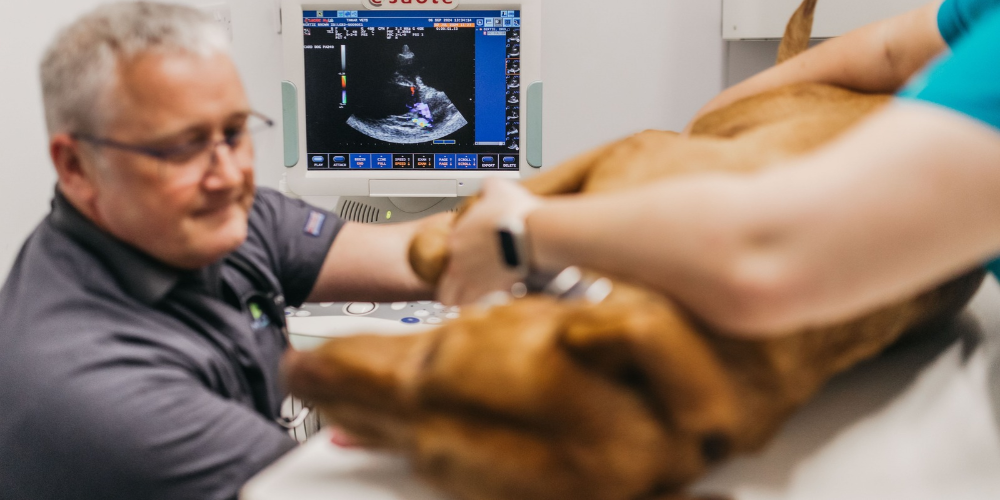
That includes Doppler echocardiography. An echocardiogram is an ultrasound examination of the heart. It allows Richard to see the heart beating in real time, assess its chambers and valves and take detailed measurements. Doppler technology also allows us to assess blood flow through the heart. It means we can go far beyond simply saying, “There’s an unusual sound,” and we can start asking much more useful questions.
Which part of the heart is affected? How significant is it? Is the heart coping? Does this pet need treatment now or monitoring for the future?
Electrocardiography (ECG)
Other investigations available at Tamar Vets include electrocardiography (ECG), which assesses the heart’s electrical activity and rhythm, alongside X-rays and blood pressure monitoring. We also have wider diagnostic facilities including laboratory testing and endoscopy, which can be valuable because coughing, breathing problems and poor exercise tolerance aren’t exclusively caused by the heart. Sometimes investigating the heart also means ruling out everything else.
Why having this expertise in-house matters
There is another benefit that isn’t really about equipment at all.
It’s continuity. Heart conditions often aren’t diagnosed, treated and forgotten about in a single appointment. Some pets need monitoring over months or years. A condition may be present but not yet require treatment. Medication may eventually be introduced and adjusted. Repeat scans or other tests may be recommended to see whether anything has changed.
Having Richard’s cardiology expertise within the Tamar Vets team means we can provide that more advanced level of investigation while remaining connected to your pet’s wider veterinary care. Richard also accepts referrals from other local veterinary practices for cardiac cases requiring further investigation. For owners across Bude, North Cornwall and the surrounding area, that means access to experienced cardiac investigation closer to home.
While not every heart condition can be cured, early recognition, accurate diagnosis, appropriate medication where required and regular monitoring can all help us make informed decisions about a pet’s health and quality of life.
If you’ve noticed reduced stamina, coughing, breathing changes, weakness or collapse, or something else about your pet’s behaviour or activity has changed, arrange a veterinary examination.
Likewise, if your vet detects a heart murmur or abnormal rhythm during a routine check-up, don’t panic. It doesn’t tell us the whole story. Further investigation can help us understand whether there is an underlying problem and what, if anything, needs to happen next.
If you’re concerned about your pet’s heart health, have noticed a change in their breathing or exercise tolerance, or have been advised that they would benefit from further cardiac investigation, please speak to the Tamar Vets team.