
How easy is spotting the signs of arthritis in pets? Maybe they pause at the bottom of the stairs now. Perhaps getting into the car takes two attempts instead of one effortless leap. The morning walk has become a little shorter. Your cat has stopped appearing on the kitchen worktop (possibly the one occasion you’re not delighted by improved behaviour). These changes are easy to put down to age, but the reality may be that your pet is becoming arthritic.
“They’re just slowing down.” We hear it a lot. Sometimes pets naturally become less energetic as they get older. But changes in how your pet moves, plays, or goes about their normal routine can also be one of the first signs something hurts.
There is much more we can do for arthritic pets today than simply accept that they’re getting older.
Arthritis doesn’t always look like a limp
Dogs and cats are remarkably good at adapting to discomfort. Instead of telling us something hurts, they change how they do things. Spotting the signs of arthritis may actually look like this…
You might notice your dog:
- taking longer to get up after sleeping
- looking stiff for the first few steps
- hesitating before jumping into the car
- slowing down or wanting to turn home earlier on walks
- avoiding stairs or slippery floors
- sitting or lying in an unusual position
- becoming less enthusiastic about games
- licking repeatedly around a particular joint
- seeming grumpier when touched or moved.
Cats can be even more discreet.
An arthritic cat might:
- stop jumping onto a favourite windowsill
- choose a lower sleeping spot
- struggle with the cat flap or litter tray
- groom themselves less effectively
- or simply spend more time sleeping.
None of these changes necessarily means arthritis. But they are worth noticing.
And importantly, age itself isn’t a diagnosis.
What causes arthritis?
Arthritis, or osteoarthritis, involves changes within a joint that lead to inflammation, stiffness and pain.
It is particularly common as pets get older, but it isn’t exclusively a senior-pet problem. Previous injuries, joint abnormalities such as hip or elbow dysplasia, genetics, body weight and other factors can all play a part.
That means a relatively young dog can have arthritis too.
At Tamar Vets, if we suspect arthritis, we can assess how your pet moves, examine their joints and discuss the changes you’ve noticed at home. Depending on the individual pet, further investigation such as X-rays may be recommended.
Getting a diagnosis matters because “slowing down” can have causes other than arthritis, and because once we know what we’re dealing with, we can put together a plan specifically for your pet.
Arthritis treatment has moved on
There isn’t one magic arthritis treatment that suits every animal. In fact, some of the best results come from looking at the whole picture.
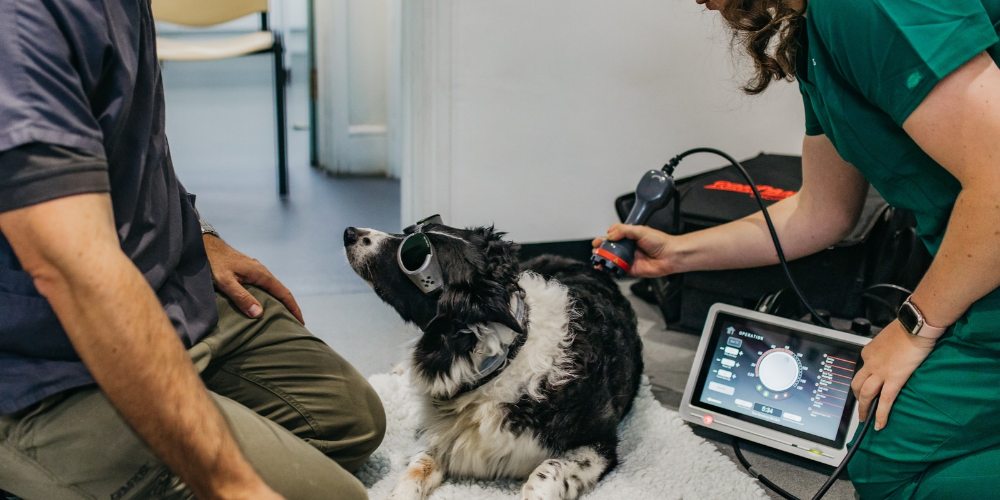
For one pet, losing a little excess weight might make an enormous difference. Another may need pain-relieving medication alongside changes to their exercise. Another might benefit from physiotherapy or laser therapy. And for some pets with confirmed arthritis, newer treatments such as regenerative medicine may form part of the conversation.
Small changes at home can make a surprisingly big difference
Sometimes improving mobility starts with something as simple as looking at your floor. A dog with sore hips may find laminate or tiles incredibly difficult to navigate. A few strategically placed rugs or runners can provide much-needed grip.
Other useful changes can include:
A supportive bed
A good-quality orthopaedic or memory-foam bed can make resting and getting up easier.
Ramps instead of jumps
A ramp into the car or to a favourite spot can reduce repeated strain on painful joints.
Rethinking exercise
Arthritic pets still need movement. In many cases, regular, appropriate exercise helps maintain muscle strength and mobility. The important part is finding the right amount and type of exercise for your pet rather than alternating between very little activity and one enormous weekend walk.
Keeping an eye on weight
Extra weight means extra load through already uncomfortable joints. If your pet is carrying more than they should, our team can help you approach weight loss safely.
And then there is rehabilitation.
Physiotherapy isn’t just for people
Veterinary physiotherapy can be an extremely useful part of managing mobility problems.
Our veterinary physiotherapist, Tanya, specialises in Canine Osteoarthritis and can assess areas including your pet’s gait, posture, range of movement, muscle tone and pain response before creating an individual plan.
Depending on your pet, treatment can include techniques such as massage and joint mobilisation alongside stretching, balance, coordination and strengthening exercises.
For a pet who has gradually stopped using a painful limb normally, rebuilding strength and confidence can be an important part of the bigger arthritis picture.
And what exactly is regenerative medicine?
This is one of the more exciting developments in the way we can approach arthritis at Tamar Vets.
Traditional arthritis management remains incredibly important. Pain relief, sensible exercise, weight management, environmental changes and rehabilitation can all have an important role. Regenerative medicine gives us another option.
Rather than only managing the consequences of arthritis, these treatments are designed to act directly within the affected joint.
At Tamar Vets, regenerative medicine options for suitable patients include:
Platelet Rich Plasma (PRP)
Platelets are components of your pet’s own blood that play an important role in tissue healing.
For PRP treatment, platelets are separated from a blood sample to produce a platelet-rich preparation. This is then injected into the affected arthritic joint while your dog or cat is sedated.
The idea is to concentrate those naturally occurring components associated with healing where they’re needed.
Stem Cell Therapy
Stem cells have the ability to develop into different types of cells and have the potential to support the healing of damaged tissue.
Stem cell therapy is another regenerative option we can consider for certain pets with arthritis, with the aim of improving comfort and joint function over the longer term.
Arthramid
For severely affected arthritic joints, we can also use a visco-elastic gel injected into the joint.
It is designed to support the joint by providing an alternative to its lubricating joint fluid and helping restore some elasticity.
These treatments are minimally invasive and may help relieve pain, restore movement and improve quality of life in appropriately selected patients.
They’re not automatically the right answer for every stiff dog or cat, however. At Tamar Vets, regenerative treatments are offered to suitable patients whose arthritis has been confirmed through X-rays or other diagnostic investigations. That’s important. Good arthritis management isn’t about choosing the newest treatment – it’s about choosing the right combination of treatments for the animal in front of us.
Spotting the signs of arthritis in pets: What we’d really like owners to notice
You know your pet’s ‘normal’ better than anyone. So don’t only look for dramatic signs of pain. Look for the tiny compromises. For example, the spaniel who happily runs on a walk but is noticeably stiff when they get out of bed that evening. The cat who hasn’t jumped onto the windowsill for three months.
Those details matter.
Sometimes one of the most useful things you can do is take a video on your phone. If your pet looks stiff first thing in the morning, struggles with the stairs or moves differently after exercise, record it. Pets have an uncanny ability to walk beautifully the moment they enter the consulting room, so seeing what happens at home can be genuinely helpful!
Don’t write it off as old age
Arthritis is a long-term condition and is something we manage rather than cure.
So if you’ve caught yourself saying, “They’re just getting old,” take another look. If you’ve noticed a change, get in touch with the Tamar Vets team and book a mobility assessment. We can assess your pet, investigate what’s causing the problem and talk you through the options available to help keep them comfortable and moving.
Bude: 01288 354796
Holsworthy: 01409 254078
Hartland: 01237 441741
Appointments can also be booked online through our website.